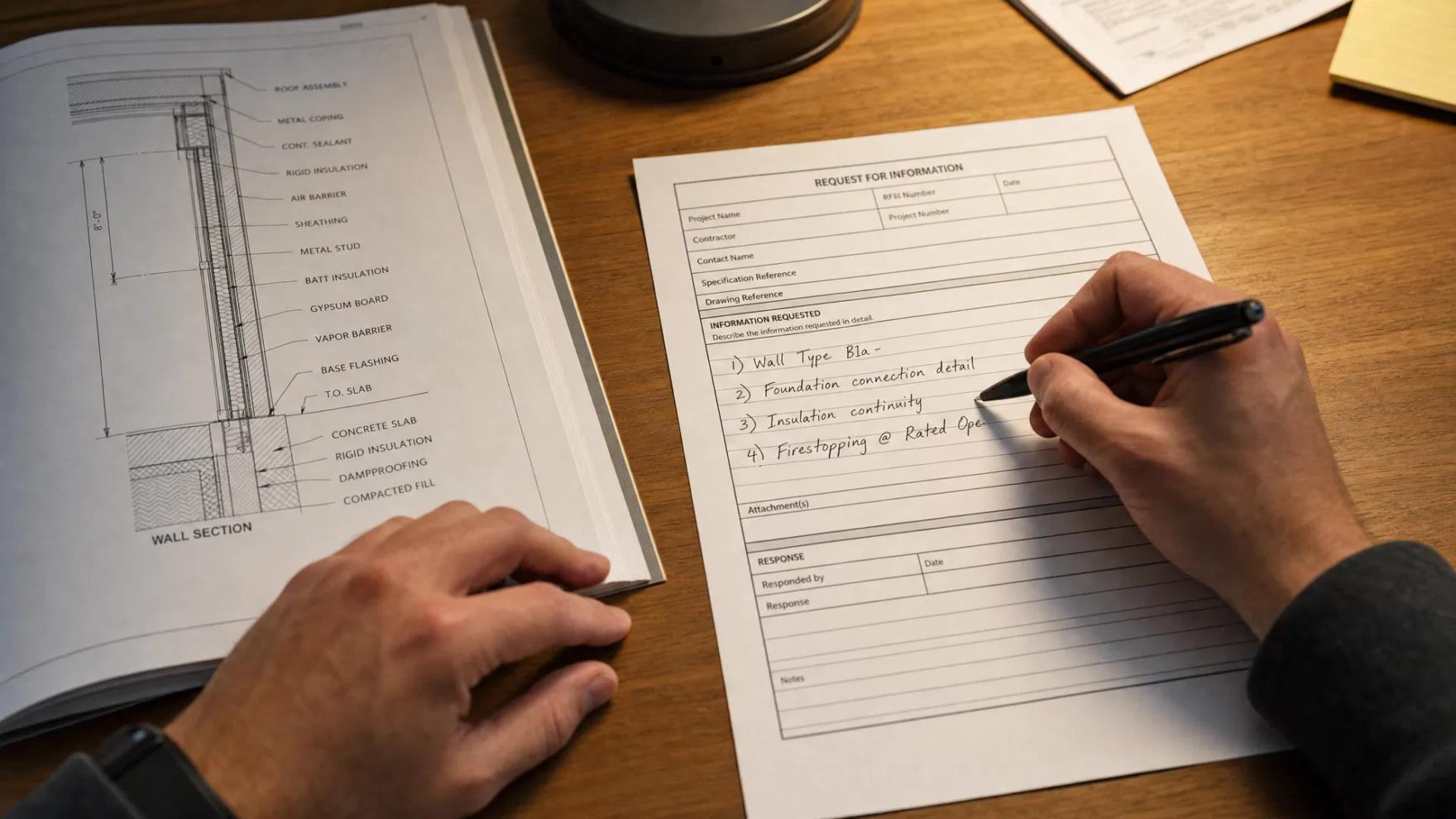
The RFI is the most underrated tool in millwork. Written well, it resolves an ambiguity before it becomes a rejected submittal or a re-cut part. Written badly, it sits in an inbox for a week while your floor waits. Here is how to write the kind that gets answered fast.
- Purpose
- Resolve ambiguity before it costs you
- Good RFI
- Specific, referenced, and proposes an answer
- Bad RFI
- Vague, open-ended, and easy to ignore
Why the RFI matters
An RFI is how you put a question on the record and protect your schedule. When a spec is silent, contradictory, or impossible to build as drawn, the RFI is the difference between resolving it now — cheaply — and discovering it after fabrication, expensively. Raising it before drafting is always cheaper than catching it at submittal.
Reference the exact document
Cite the drawing number, detail, spec section, and revision you are asking about. "The casework on A-4, detail 3, references a hardware spec in 12 35 30 that conflicts with the elevation" gets answered. "What hardware do you want?" does not. The reviewer should be able to find exactly what you are looking at without hunting.
Ask one clear question
One RFI, one question. Bundling five questions into one request guarantees a partial answer and a second round. Keep each RFI tight and answerable, so the architect can respond yes/no or A/B without writing an essay. The easier you make it to answer, the faster it comes back.
Propose your answer
The fastest RFIs propose a resolution: "We recommend X for consistency with the adjacent millwork — please confirm." That turns the architect's job from designing a solution into approving one, which is far quicker. It also signals you understand the work, which builds the trust that gets your next RFI answered fast.
Track it to resolution
Log every RFI with a number, a date sent, and a date answered, and do not draft the affected work until it is resolved or you have a documented assumption in writing. Untracked RFIs are how a forgotten question becomes a re-drawn sheet. Clean RFI discipline is part of what keeps a package from coming back — alongside a pre-submittal checklist.